Sports Officiating: The Complete 2026 Industry Guide
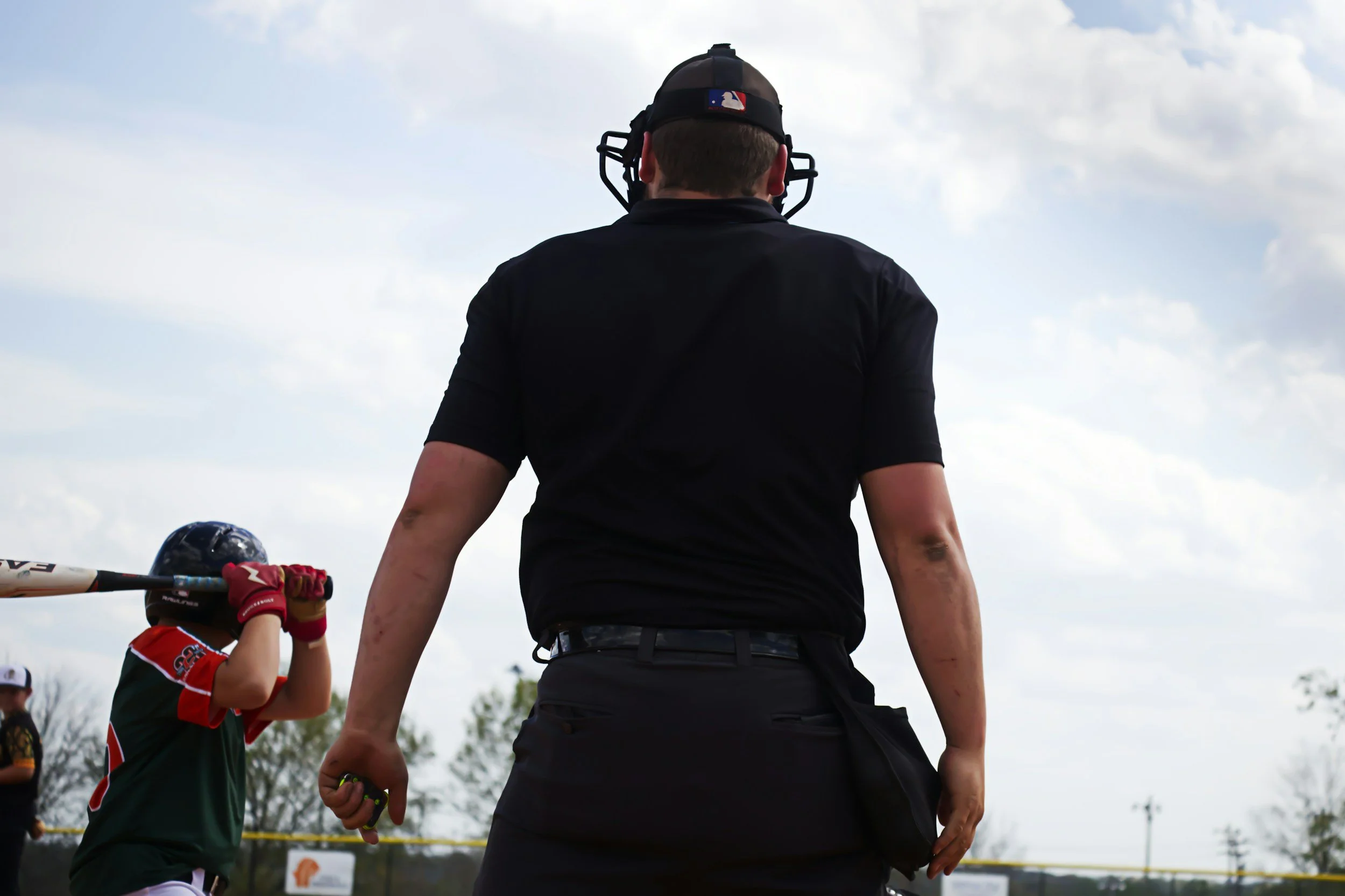
Sports official working a youth baseball game
Sports officiating is one of the most essential, misunderstood, and increasingly strained corners of the athletics industry. Every whistle blown at a Saturday youth soccer match, every strike called in a high school baseball doubleheader, and every foul whistled in a college basketball arena depends on a trained official willing to show up, make decisions in real time, and absorb the pressure that comes with the role. As leagues expand, tournaments multiply, and youth participation grows, the demand for qualified officials has outpaced supply in nearly every sport at nearly every level. This guide walks through what sports officiating actually involves in 2026, how officials are trained and deployed, what the work pays, why the official shortage matters, and how anyone interested in entering the field can do so this season.
Whether you are a league administrator trying to staff your fall schedule, an athletic director rebuilding a roster of dependable crews, or an adult considering officiating as a side career, the dynamics shaping the industry today are different than they were even three years ago. Technology, staffing models, background screening standards, and recruitment pipelines have all evolved. Understanding the full picture helps everyone — officials, assigners, and leagues — make better decisions.
What Sports Officiating Actually Involves
At its core, sports officiating is the on-field or on-court enforcement of the rules of a sport, but that description undersells what the job actually requires. Officials are decision-makers operating under time pressure, with incomplete information, in front of crowds that often disagree with them. They manage game flow, communicate with coaches and players, apply rule books that can run hundreds of pages, and make judgment calls that affect outcomes. The mechanical part of the job — positioning, signaling, reporting — is learned quickly. The harder part is the temperament: staying composed when a call goes against the home crowd, resetting after a missed whistle, and maintaining consistency across four quarters or nine innings.
Officiating also involves significant preparation outside the game itself. Officials study rule changes annually, review film of their own performances when available, attend clinics, complete recertification, and coordinate logistics for every assignment they accept. The visible portion of the job — the two hours on the field — is usually a fraction of the total time invested. New officials often underestimate this, which is one reason retention in the first three years is a persistent industry challenge.
The Roles: Referee, Umpire, Judge, Linesperson
Different sports use different terminology, and the responsibilities behind those titles vary in meaningful ways. Understanding the distinctions matters because the training pathways, certification structures, and pay scales differ by role.
Referees
The term referee is most commonly used in basketball, football, soccer, rugby, hockey, and combat sports. Referees typically have the broadest authority on the field or court — they manage the game, enforce penalties, and often have final say over disputed situations. In football, the referee leads a crew of five to seven officials and is responsible for announcing penalties. In basketball, referees work in two- or three-person crews with shared authority. In soccer, the center referee runs the game while assistant referees support from the sidelines.
Umpires
Umpires officiate baseball, softball, cricket, and certain other sports. The umpire's role is heavily focused on judgment calls — balls and strikes, safe and out, fair and foul — and on managing the pace of play. Baseball and softball umpires work in crews ranging from one to four depending on the level, with the plate umpire carrying the most responsibility and the most physical demand. Umpiring tends to require more specialized equipment than refereeing, including protective gear that officials purchase themselves.
Judges
Judges are used in sports where scoring is subjective or where multiple officials evaluate different aspects of performance. Gymnastics, diving, figure skating, boxing, and mixed martial arts all rely on judges. The work requires deep technical knowledge of a sport's scoring system and the ability to evaluate performance in real time, often without the benefit of replay.
Linespersons and Assistant Officials
Linespersons, line judges, assistant referees, and similar roles support the primary official by monitoring specific areas of the field or specific aspects of play. Tennis line judges call balls in or out. Soccer assistant referees monitor offside and out-of-bounds. Football line judges watch the line of scrimmage and sidelines. These roles are often where new officials begin, gaining experience before moving into lead positions.
How Officials Are Trained and Certified by Sport
Officiating certification is sport-specific and, in the United States, generally administered by state associations affiliated with the National Federation of State High School Associations for scholastic sports, and by separate governing bodies for collegiate and youth sports. The pathway typically begins with a rules clinic or online course, followed by a written exam, a background check, and on-field evaluation. Certification is renewed annually in most sports, with continuing education requirements that vary by association.
Background screening has become a non-negotiable component of certification across virtually every level. Leagues working with minors require documented checks, and many states have raised the bar on what constitutes an acceptable screen. Officials Unlimited offers comprehensive background check services that meet the standards used by school districts, club leagues, and tournament operators. For new officials, completing a thorough background check early in the certification process avoids delays once assignments start coming in.
Training itself has become more accessible than it was a decade ago. Most sports now offer online rules courses, video-based mechanics training, and virtual classroom sessions in addition to in-person clinics. Officials Unlimited has invested in virtual reality training tools that allow new officials to practice positioning, decision-making, and game management in simulated environments before stepping onto a real field. This kind of repetition was not available to previous generations of officials, and it meaningfully shortens the learning curve.
How Games Get Staffed: Associations, Assigners, and Staffing Companies
Getting officials onto fields is its own operational discipline. The three primary models are local officiating associations, independent assigners, and staffing companies — and most leagues use some combination of all three depending on their season and level.
Local associations are the traditional backbone of the industry. These are typically nonprofit groups organized by sport and geography, with members paying dues and committing to a certain number of games per season. Associations handle training, mentorship, and often the assignment of games to their members. They work well in regions with stable populations of officials but struggle when membership declines or when geographic coverage is uneven.
Independent assigners are individuals who hold contracts with leagues and distribute games to officials they have recruited or recruited through associations. Assigners earn a per-game fee and are responsible for ensuring that every contest has the right number of qualified officials present. Good assigners maintain deep benches and strong relationships with both leagues and officials; the role is part logistics, part talent management.
Staffing companies operate at a different scale, often covering multiple sports, multiple regions, and large tournament operations. Officials Unlimited's staffing services are built for leagues, schools, and tournament operators that need reliable coverage without managing the recruitment, vetting, and scheduling themselves. The staffing model has grown rapidly as leagues find that the time required to manage officials internally has outpaced what their administrative staff can absorb. A staffing partner handles recruitment, certification verification, background checks, scheduling, payment, and replacement coverage when an official cancels.
The Sports Officials Shortage and Why It Matters for Leagues
The sports officials shortage is the defining structural issue facing the industry in 2026. State associations across the country have reported double-digit percentage declines in registered officials over the past several years, with some sports — notably football, baseball, and softball — losing officials faster than they can recruit replacements. The reasons are well-documented: aging demographics, with a large cohort of officials reaching retirement age simultaneously; the rise in unsportsmanlike behavior from parents and spectators, which has driven new officials out of the profession within their first two seasons; and competing demands on adults' time and income.
The consequences for leagues are concrete. Games get canceled or postponed when crews cannot be assembled. Tournaments shrink their brackets because they cannot guarantee officiating coverage. Younger officials are pushed into higher-level games before they are ready, which affects game quality and accelerates burnout. Some leagues have responded by raising game fees, which helps with retention but increases operational costs that ultimately get passed to participants.
The shortage is not uniform. Urban areas with strong officiating associations have weathered it better than rural regions where a single retirement can leave a county uncovered. Sports with shorter seasons and lower physical demands have generally fared better than sports requiring extensive travel or high-impact contact. Leagues that invest in recruitment, mentorship, and respectful environments retain officials longer than leagues that treat officiating as a commodity.
Addressing the shortage requires action on multiple fronts. Recruitment pipelines need to reach younger adults and women, both of whom are underrepresented in officiating. Spectator behavior policies need teeth — verbal abuse standards, ejection protocols, and consistent enforcement. And the operational burden on officials themselves needs to decrease through better scheduling tools, simpler payment systems, and assignment platforms that respect their time.
Pay, Travel, and What to Expect Financially
Sports referee jobs pay on a per-game basis in nearly every sport and at nearly every level. Rates vary widely by sport, level, and region, but some general patterns hold. Youth recreational games typically pay between $30 and $60 per game. Middle school games pay slightly more. High school varsity games generally pay between $70 and $130 per game depending on the sport and state. Small college and junior college games pay $100 to $250 per game. NCAA Division I games at the conference level pay several hundred to several thousand dollars per game, but those assignments require years of advancement and are held by a relatively small group of officials.
Travel is part of the job at every level above recreational. New officials usually work games within a 30-minute radius of home. As they advance, the radius expands — varsity high school officials often drive an hour or more for games, and college officials regularly travel across state lines. Mileage reimbursement exists in some assignments but not all, and officials should factor vehicle costs, fuel, and time into their effective hourly rate.
Equipment is another cost that new officials underestimate. Uniforms, shoes, whistles, indicators, flags, and protective gear add up to several hundred dollars for most sports and well over a thousand for baseball and softball plate gear. Most officials view this as a one-time investment that lasts several seasons, but it does affect first-year economics.
For officials working through a staffing company like Officials Unlimited, payment processing and scheduling are simplified through centralized platforms. The online scheduling system consolidates assignments, payments, and game details in one place, which removes a significant administrative burden that officials traditionally absorb themselves.
Pathways from Recreational to Collegiate Officiating
The progression from a first youth recreational game to working collegiate athletics generally follows a recognizable arc, though the timeline varies by sport and by the official's commitment to advancement. Most officials begin in youth recreational leagues, where the stakes are lower and the learning environment is more forgiving. After a season or two, officials move to middle school and sub-varsity high school games, where the speed of play increases and the rule application becomes stricter.
Varsity high school is the level where many officials settle for the duration of their careers. The games are competitive, the pay is reasonable, and the schedule is manageable alongside a full-time job. Reaching varsity typically takes three to five years of consistent work, completion of state association requirements, and positive evaluations from veteran officials and assigners.
Advancing to college officiating requires intentional effort. Officials interested in college work attend regional and national camps, where college supervisors evaluate them and decide whether to invite them onto small college staffs. Junior college and Division III assignments are the typical entry points, with NAIA and Division II following as officials demonstrate readiness. Division I is the smallest tier and the most competitive — officials reach it through years of strong performance, networking, and often relocation to regions where college assignments are more available.
Throughout this progression, mentorship matters more than any other factor. Officials who develop relationships with veteran crew members, attend post-game discussions, and seek out feedback advance faster than those who treat each game as an isolated event. The best associations and staffing organizations build mentorship into their structure rather than leaving it to chance.
How Technology Is Changing the Officiating Industry
Technology is reshaping sports officiating in ways that affect both how games are called and how officials are developed. Replay review has expanded from professional leagues into college and select high school playoff games, changing the relationship between on-field judgment and post-play verification. Communication systems — once limited to football crews — are now used in soccer, basketball, and lacrosse at higher levels, allowing crews to coordinate in real time.
Training has been transformed most visibly. Virtual reality, video review platforms, and AI-assisted evaluation tools allow officials to study their performance and develop game-specific skills outside the traditional clinic format. Officials Unlimited's investment in virtual reality training reflects a broader industry shift toward immersive, repeatable practice that does not require a live game. New officials can rehearse mechanics, positioning, and decision-making hundreds of times before they ever step onto a field, which dramatically accelerates competence.
Scheduling and assignment platforms have also matured. The days of phone trees and paper schedules are largely behind us. Modern platforms handle assignment offers, acceptance, cancellations, replacement coverage, payment processing, and compliance documentation in integrated systems that work on a phone. This reduces the administrative friction that historically drove officials out of the profession in their first two seasons.
Background screening, which used to be inconsistent across leagues, has become standardized through digital verification platforms. Leagues can confirm an official's certification status, background check completion, and assignment history in real time. This benefits everyone — officials get credit for their credentials, leagues get assurance that crews are properly vetted, and standards across the industry rise.
How to Get Started This Season
For anyone considering sports officiating, the path to a first game is shorter than most people assume. The basic steps are consistent across sports: identify the sport you want to officiate, contact your state's high school athletic association or the relevant youth governing body to find the certification process, complete the rules course and exam, pass a background check, purchase basic equipment, and accept your first assignments.
How to become a sports official in 2026 is genuinely easier than it was a decade ago because most of the administrative steps can be completed online. Rules courses are available on demand, exams are administered digitally, and certification status is verifiable through state databases. For someone starting in late summer or early fall, it is realistic to be certified and working games within four to six weeks for most sports.
The first season is the most important and the most fragile. New officials who find a supportive crew, work consistently, and receive constructive feedback tend to continue. Those who are thrown into difficult games without preparation or support often leave. Choosing where to start matters — recreational leagues with structured mentorship programs are generally a better entry point than competitive travel circuits, even though the latter may pay more.
Leagues looking to bring on new officials should focus on creating the conditions that retain them: clear training, pairing with experienced mentors, manageable schedules, prompt payment, and an environment where officials are respected by coaches and parents. The leagues that do this well rarely struggle with shortages. The leagues that treat officials as interchangeable rarely keep them past year one.
For leagues that have already tried internal recruitment and found it unsustainable, partnering with a staffing company removes the operational burden while ensuring consistent coverage. Officials Unlimited works with school districts, club leagues, tournaments, and recreational organizations across the country to provide vetted, trained, and reliable crews for every sport and every level. The model lets athletic directors and league administrators focus on running their programs rather than chasing officials each week.
Schedule a Staffing Consultation
Run a league struggling to find officials? The shortage is real, but it is solvable with the right partner. Officials Unlimited handles recruitment, certification verification, background checks, scheduling, and game-day coverage so your league never has to cancel a game for lack of a crew. Schedule a staffing consultation to talk through your season, your coverage gaps, and how we can help.